
9 Items to Include in Your Next Relocation Management RFP

If you have ever been through the Request for Proposal, (RFP) process for employee relocation services, you know how stressful and time-consuming it can be.

An integral part of every RFP is the detailed timeline.

This timeline explains when the RFP was sent, the due date, when questions are due from bidders, when you are to respond to questions, and dates for the next steps (presentations, start date, and more). However, the timelines often underestimate how long some items take to complete.

Sometimes, Relocation Management Companies (RMCs) will have dozens of questions requiring responses, which can add several business days to the process. This often results in extensions and delays that you did not anticipate when going out to bid.

In this post, we have outlined 9 of the most common questions that RMCs ask after receiving an RFP.
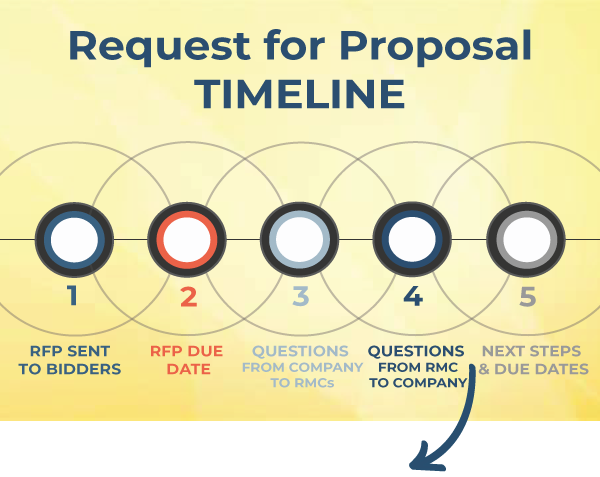
RFP proposal timeline includes deadlines and 9 Items typically asked by RMCs

The 9 questions below are actual questions
from RMCs in actual RFPs from the past 24 months.

The goal should be to answer these questions up front in your RFP before ever sending it to an RMC.

This will save you a significant amount of time during the Q&A process and enable each bidder to provide you with a response that more accurately addresses your needs.

1) Can you please provide copies of your relocation policies?
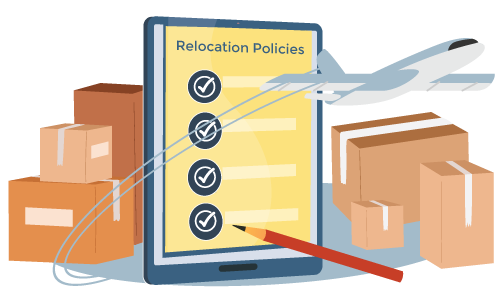
RMCs require access to your relocation policies or a detailed summary to tailor their pricing and responses accurately to your needs

This is the most commonly asked question.

RMCs want to look at your policies to tailor their responses and pricing to your program. It helps to provide all of your relocation policies or, at a minimum, a detailed summary of your original bid package so that prospective bidders know exactly what you are looking for.

Some RMCs suggest policy changes that suit your needs and budget without adversely impacting the employee’s transition.

2) Do you have any preferred or company-designated third-party suppliers or vendors?  If so, can you please provide the company names?

Including existing relationships and specific requirements in the RFP allows RMCs to show how they’ll work with your current providers and disclose any related management fees.

Typically, RMCs will work with client-designated service providers.

However, they expect your provider(s) to meet their quality standards to maintain a consistent, excellent experience for your relocating employees.

Describing any existing relationships and specific requirements in the RFP gives the RMC an opportunity to demonstrate how they will interact with your existing preferred providers and disclose any associated management fees that may occur. 

3) What is your annual volume?

Include detailed annual volume information in your RFP and a clear transition profile ensures a more accurate bid.
When answering this question in your RFP, include:

  • Number of homes sold per year
  • Number of renters you relocate
  • Any short-term domestic assignments
  • Lump Sums
  • Internship programs
  • Other relevant information

A precise transition profile results in a more accurate bid response.

4) What type of home sale benefits does your company offer?
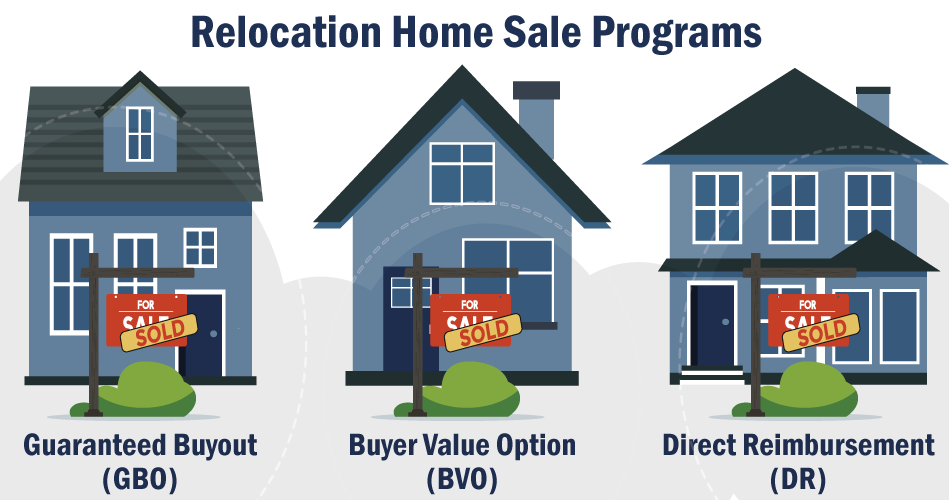
Do you offer Buyer Value Options (BVOs), Guaranteed Buyouts (GBOs), Direct Reimbursement (DR), or marketing assistance only?

    • If so, how many of each do you typically offer in a given year?

This information tells the RMC what areas and processes to focus on in their response and provides the most accurate pricing structure.

An experienced RMC will also help you to evaluate each method and determine which is most beneficial for your company.

5) What is your average home sale price?

Knowing the average home sale price helps each RMC determine a fee structure for your home sale program

This information is essential if you offer home sale benefits to your employees.

  • Knowing the average home sale price helps each RMC determine a fee structure for your home sale program.

Additionally, providing the average home purchase price gives the RMC a good idea of the type of home you are interested in finding for your employee.

6) What are the top challenges that you have with your current program?

Sharing any challenges you're facing and areas for improvement in your RFP allows the RMC to propose solutions that can improve the process for you and your employees.

RMCs are well-acquainted with the myriad of challenges that occur when relocating employees.

  • Do you need help with exceptions or failed relocations/assignments?

Letting the RMC know some of the problems you are having and the areas you would like to see improved in your RFP allows them to suggest solutions that will enhance the process for you and your employees.

7) What are your historical locations?

Including historical information in your RFP helps the RMC identify volume discounts, particularly if you frequently relocate to the same destinations.

Listing out historical information allows the RMC to scout volume discounts, especially if you frequently move to the same location.

  • What are your top departure location(s)?
  • What are your top destination location(s)?
  • Do you have locations that have been historically challenging?
    (e.g., remote/small towns.)

Providing these details enables the RMC to share their knowledge and familiarity with the locations you list and provide any creative solutions to meet the needs of your relocating employees.

8) Will the RMC be taking over any existing files?

It's crucial to inform your prospective RMC whether they will need to take over any ongoing relocations or assignments. If so, specify the number and outline the expectations.

It’s important to let your prospective RMC know whether or not they will be required to take over any existing relocations or assignments. If so, indicate how many and what the expectations will be.

  • Primary considerations for the RMC include where the employee is in the process

    • Domestic – is there a home sale involved?
    • International –  how much time is left on the assignment?

Providing some detail on this upfront in the RFP will enable the RMC to provide you with their criteria, which determines how certain types of files will be transitioned, as well as recommendations for those files that should stay with your current provider until completion.

9) If you have international assignments, does the global scope of work include any compensation services?

By providing detailed information on International assignments, including compensation services, the RMC can share its capabilities and processes and offer accurate pricing for these services.

Compensation services would include:

  • Creating the compensation calculations and balance sheets
  • Updating the balance sheets
  • Tracking the compensation data
  • Working with your payrolls to ensure proper payment and reporting
  • Providing the year-end compensation summary report to your third-party tax provider to prepare the assignee tax return

By providing as much detail as possible about this, the RMC will provide you with its capabilities, processes, and appropriate pricing for this service.

Including all of these points in your RFP does not guarantee
that there will not be any questions.

However, it will make the responses more uniform, reduce the number of questions from the responding RMCs,
save you some time, and ensure that you are comparing similar responses.

WHR Global's Free RFP Generator

Our free tool takes less than 1 minute to complete!

Answer a few simple questions, and you’ll be ready to run your RFP!

WHR Global,a leader in global mobility, is an independent, full-service relocation management company with offices in the US, Switzerland, and Singapore. WHR strives to offer cost-effective relocation benefits without compromising empathy, ethics, or service

The Pros and Cons of Going Out to Bid for a Relocation Supplier

Read the updated version of this article here.

So, you have made the decision to outsource your employee relocations to a Relocation Management Company, or RMC. If only that was where the work ended!

Now, you must choose the one RMC that best fits your workplace culture, employee needs, company budget, and any other criteria that you require in a supplier. With so many RMCs to choose from, the question becomes how do you find the right one?

relocation suppliers

The Procurement Process

When selecting a relocation supplier, it really comes down to two options: Going out to bid (competitive procurement), or selecting a supplier on your own (non-competitive procurement).

Procurement Option 1

Going out to bid, also known as competitive procurement or open tendering, occurs when you send out a bid request, typically in the form of a request for proposals (RFP). RMCs can choose to respond to your request and submit a proposal explaining their company, capabilities, and pricing. Once you receive the proposals, you will compare each against your most important evaluation criteria. This process can include multiple rounds of meetings or bidding.

Procurement Option 2

If you’ve already decided which RMC you want to pursue based on your research and previous communications, then you don’t need to open your search to other suppliers. This non-competitive procurement process, also known as sole sourcing, occurs when you choose an RMC without a bidding process. However, in some instances, a company will choose two or three RMCs to reach out to, resulting in a smaller, more intimate bidding process.

Each procurement process has its own pros and cons, so it’s essential that you choose the path that best suits your company’s and relocating employees’ needs.

Advantages of Going Out to Bid

  1. It encourages competition: Typically, when you go out to bid, you will have a greater pool of RMCs to choose from, and those responding are likely to offer you their best pricing right away. Another consideration is you may learn about other benefits or service offerings that you didn’t think to ask for initially.
  1. Advocates transparency: The idea behind the bidding process is each RMC will essentially lay all their cards on the table: They show you their pricing, services, and value-adds, and you choose a supplier based on those responses. This results in a fair selection process while offering you a clear vision of what is most important to your company.
  1. Easily compare different RMCs: Having RMCs follow a certain format, and each answering the same questions, allows you to easily compare answers and rule out any RMCs that don’t meet your immediate requirements.
  1. Fully vet your options­­: Creating an RFP lets you choose what you want to learn about the responding suppliers. This helps you fully understand what each RMC has to offer and allows you to ultimately choose the company that best fits your needs.

Disadvantages of Going Out to Bid

  1. It can be time-consuming: The bidding process can take anywhere from 2 – 6 months, or even longer, depending on your internal decision-making process. It also involves several intricate steps from RFP development to initial bids and follow-up questions to final presentations and on-site visits to help you make your decision.
  1. Associated costs: It will undoubtedly cost more to go through the RFP process than to simply choose an RMC to work with. The cost of developing the RFP, screening suppliers, reviewing responses, and follow-ups can take a toll on your company’s time and budget. Typically, a company’s relocation program accounts for 90-95% of the relocation “spend”, with only 5-10% being paid out to the RMC.
  1. Eliminating the wrong suppliers: There are many viable RMCs that simply don’t participate in competitive bidding opportunities. The reasons vary from high associated costs to having a different pricing structure that does not compare easily in an “apples to apples” review process. You could be missing out on an RMC that would be your ideal fit.
  1. Promises of unattainable pricing: For some RMCs, winning new business is more important than upholding your needs throughout a long-term partnership. These RMCs will solely bid for your business to undermine competitors, even if their proposed pricing is unattainable for their own bottom line. This can cause a headache during the implementation process, or result in a requested fee increase in the first or second year.

Choosing Non-competitive Procurement

If going out to bid doesn’t sound like the best option for your company, the other option is the non-competitive procurement process.

You can select a supplier you know will best service your relocation requirements based on your research and prior communications. This process really works best if you know one or two RMCs that already fit your needs and company culture.

This option also works best if you are working within a small window of time. You won’t have to review multiple in-depth proposals—just the pricing proposals from the RMCs of your choosing.

Next Steps

So, ask yourself, what is in the best interest for your company? Do you have the time to fully vet RMCs through a competitive procurement process, or do you need an RMC now? Do you have a couple RMCs already in mind, or do you need more information on other options out there?

Selecting an RMC is an important business decision for your company. You want to find an RMC that best meets your company’s needs, whether that be high-quality support for your relocating employees, lowest cost, the most advanced technology, or a combination of all three.