WHR Group Opens Switzerland and Singapore Offices to Serve the Needs of Global Clients

PEWAUKEE, Wis., November 19, 2020 /PRNewswire/ – WHR Group, Inc. (WHR), a global leader in the employee relocation industry headquartered in Wisconsin, announces its international expansion into Basel, Switzerland, and Singapore. The Switzerland office will support clients and their transferees in Europe, the Middle East and Africa, while the Singapore office will support the Asia Pacific region.

Founded 25 years ago by Roger Thrun to service and support in-house relocation departments, WHR has grown significantly from its humble beginnings. WHR now services some of the largest organizations in the world and has relocated hundreds of thousands of employees.

“Creating a footprint in Europe, the Middle East, Africa and Asia deepens our commitment to meet the demands of our global clients,” says President, Paul DeBoer. “We are engaging clients in dynamic new ways by providing resources where needed and building supplier partnerships that are critical to maintaining industry-best service levels.”

WHR International Client Services Manager Linden Houghtby, GMS®, will be the transitional lead for both the Switzerland and Singapore offices. She will hire and train local staff who will then assume leadership and operational roles for each office. Houghtby has been instrumental in WHR’s international expansion and looks forward to instilling WHR’s culture and best practices into international operations.

WHR recently hired Jennifer Elsby, GMS®, as a Client Services Manager for the Switzerland office. After her transitional period with Houghtby, Elsby will lead and grow the Switzerland office. She has a broad background in expatriate management, leading teams in the U.S., Europe and Africa, and is uniquely qualified to fill this role.

About WHR Group, Inc.

WHR Group Inc. (WHR) is a privately owned, client-driven global relocation management company distinguished by its best-in-class service delivery and cutting-edge, proprietary technology. WHR has offices in Pewaukee, Wis., Switzerland and Singapore. With its 100% client retention rate for the past decade, WHR continues to position itself as the trusted provider in global employee relocation. To learn more about WHR, visit https://whrg.com, or follow @WHRGroup on LinkedIn, Twitter and Facebook.

Media Contact
Mindy Stroiman, Corporate Writer
Email: [email protected]
Phone: 262-523-7510

###

Linden Houghtby, MBA, GMS®

Linden Houghtby, GMS®
International Client Services Manager

Jennifer Eslby

Jennifer Elsby, GMS®
Client Services Manager

The RFP Process – Are you treating it like casual dating or a true courtship?

Think about online dating for a moment. Imagine you wanted to find a long-term romantic partner. You want a commitment, something that will last. You want someone you can count on and who will have your back in the good times and in bad. Most importantly, you want someone with whom you can plan your future –a future that includes happiness and success.

Online Dating

Would you start your search by immediately soliciting marriage proposals from say, 8-10 potential suiters? Would you entertain the potential of a serious commitment from total strangers with whom you have never spoken to, met or even dated?

What does casual dating versus seeking a serious commitment have to do with the RFP process? The current, and widely practiced Request for Proposal (RFP) process includes companies (the buyer) soliciting formal, written business commitments from several suiters (vendors/suppliers) before ever meeting or speaking. The problem with the RFP process is similar to problems some have encountered with online dating.

Anyone can write an amazing dating profile, but until you actually meet, speak and/or spend time get together, do you really know what you’re getting into? How can each person evaluate a good fit based on reading online profiles and exchanging written communication? Do the written words really provide the information needed to determine if the other person is a good potential match? Are the words alone a true and good reflection of the other person, or in the case of RFPs – does the written proposal provide a comprehensive and full representation of the potential vendor? Remember, if you are a buyer, you’re not just buying a service or product, you’re also buying a business partner that is an extension of your company and is representing you in the marketplace. You’re buying a culture, personalities and processes.

    The Current Situation

    The typical RFP process goes something like this:

    • The soliciting company issues an RFP invitation containing on average, 50-150 questions.
    • These questions are then distributed to 8-10 or more, potential vendors – many of whom they have never met or spoken to.
    • Potential vendors respond to the RFP with a final proposal averaging anywhere from 50-150 pages, or longer.
    • Soliciting company reviews all proposals, and depending on their business type/organizational structure, this review process might include several different personnel from a host of internal departments and from multiple country locations.
    • Soliciting company narrows down their potential vendors to a short list who are invited for in-person presentations.
    • After in-person meetings, soliciting company narrows down their list again to one or two potential vendors for a best and final.
    • These vendors are invited for a second round of in-person presentations.
    • Soliciting company may make a site visit to one or two finalists’ offices.
    • Company finally awards the business.

    The Problems

    1. Time = Money

    What’s wrong with the above RFP process? For starters, time = money. According to WHR Group, Inc. (WHR) President, Paul DeBoer, “We welcome RFP inquiries, but we also believe there is a more efficient and cost-effective way.” WHR is a global employee relocation company and responding to RFP requests is a normal part of doing business. DeBoer thinks the process is not the best given the amount of human resources, time and costs spent by client companies as they not only prepare their RFP questionnaires for bid, but also as companies’ personnel review completed 50-150 page RFP responses from an average of 8-10 bidders.

    The current process is lengthy and costly; and many of the above steps are done even before the company has met or spoken to potential suppliers explains DeBoer. It’s common for a company to utilize their internal personnel from many different departments to prepare RFPs and review written responses. “If you think about the costs of an HR manager, a payroll manager, a procurement manager, a tax manager, an accounting manager and a logistics manager, all with their combined total hours spent planning and reviewing bid solicitations, this gets into the tens of thousands of dollars.”

    Once all staff reviews responses and the company has shortened the list and invites several prospective vendors for in-person meetings, how many staff members are taking part in those meetings? What are their annual salaries and how many hours is each employee spending in pre-planning internal meetings, vendor presentation meetings and post presentation internal reviews?

    Finally, after meetings at the client’s site, the list will be shortened to one or two vendors who are typically invited back for another round of best and final meetings. Based on each employee’s salary and the time spent, you can calculate the total cost per employee. “You would see it’s just not a cost-effective process,” says DeBoer.

    2. Dancing with Strangers

    So much of the time spent explained above is before a company even speaks with potential suppliers to learn about the supplier’s mission, values, goals, objectives, vision, hiring standards and key personnel.

    The same holds true for the potential vendor, who only gets a glimpse of the buyer through the RFP solicitation paperwork, or by scouring a company’s website or social media. How can a vendor truly position themselves as a potential consultative partner before even having a good understanding and conversation about the company’s pain points, challenges, successes, needs, weaknesses or reasons for pursuing a new vendor?

    Executive Vice President at Powell Relocation Group, Bridget Ritchie, CRP, GMS, says, “It is well known that moving is one of the top life stressors a person can encounter. As part of a corporate relocation process, it is also one of the most personal portions of the relocation. When a company is taking into consideration who will enter their employees’ homes and handle all of their personal items, they shouldn’t even be inviting potential partners to the dance floor until they know the basics about them.” Ritchie believes that a buyer should already know about a potential vendor partner’s culture and background up front. Powell Relocation Group is a 60-year-old moving company.

    In Ritchie’s household goods (HHG) moving arena, it’s not uncommon for RFPs to be commoditized. “While not all, there are many companies who make the RFP process a machine when in reality, it’s a very personal end process for a customer’s employee experience. HHG providers are physically touching your employees’ personal items. Do you really want to make a decision about who is doing that before meeting them, understanding and asking about their culture?” Ritchie believes a better practice would be for companies to first sit down with their three favorite potential providers and discuss what’s most important to them. 

    Typically, no one person is reading the RFP in its entirety, explains Ritchie. Rather, the RFP responses are split up by applicable company departments including human resources, IT, compliance, etc., with each reading their own sections. Ritchie believe the process is cost prohibitive and archaic for clients if you consider the number of questions/responses and multiply that by the number of bidders.

    Ritchie compared the current RFP process to dating apps saying, “On dating apps, you already enter your necessary criteria you’re looking for in a partner; the necessary basics before you’ll even consider them as a partner. Then all the possible candidates pop up, and you start scrolling. You have to be god, judge and jury just based on someone’s profile picture and brief description, before you decide if you even want to read their full profile. While it may seem like a waste of time to meet someone in person early on to decide if you want to consider a future relationship with them, I would never want to start a relationship based simply on words they wrote about themselves. Meeting someone first can save a lot of time invested in the process. While on paper they met all my criteria, meeting them allows me to see the real them; to get a feel for if I want to start dating them, much less be in relationship with them.”

    If it really just comes down to who has the lowest price, explains DeBoer, “then issuing an RFP without prior conversations or meeting might make sense.”

    The current RFP process takes place before companies even determine suitability. Or as compared to dating, before the right suiters are even identified. When your company hires, do you conduct interviews with every candidate who submits a resume, or do you screen candidates first and determine a short list of viable candidates based on fit and who can solve the need identified by the employment opening? Once those viable employee candidates are identified, doesn’t your company usually begin dialogs with those candidates? Customarily, candidates are given the opportunity to speak with a perspective employer to discuss how they might be a good fit for one another based on goals, skills, personalities, values and experience. It’s a conversation that includes meeting, talking, asking and answering questions, all to help determine suitability.

    Partner, Executive Vice President, Heather James, CRP, GMS, and Executive Vice President, Karl Thuge, both of Nomad Temporary Housing weighed in on the current RFP process. “Part of the success in the vendor selection process is asking the right questions and often many companies don’t,” said James.

    Thuge believes the vetting process should be tighter, and that companies should issue a Request for Information (RFI) first before an RFP, with no more than 10 questions. “That way, if you need someone with offices in international locations, or if you a need high tech solution or if you want a provider with a no voicemail policy, you can weed out unqualified bidders right from the start,” said Thuge.

    Thuge firmly believes an RFI should include references and companies should check those references before inviting providers to participate in the formal RFP bidding process. Both Thuge and James also believe that soliciting companies should talk to trusted industry colleagues and find out if the colleague’s current provider is a good fit or not, and why.

    According to independent Mobility Consultant, John B. Sculley, SCRP, companies should do their internal research and due diligence before even thinking about going out to market for bids. Sculley helps companies with their employee relocation needs including internal policies, service administration, selection of providers and assisting the buyer team in provider selection.

    “Companies need to do their internal homework,” said Sculley. “They need to take a hard look at their business users and business function specialties so that what the company ultimately buys will really anticipate the needs of their business environment. Some companies think they are doing a potential provider a favor by throwing them into the RFP process before the company even considers if the provider would actually be a good fit.” Sculley recommends that companies pre-screen before inviting bidders to ensure those bidding meet the company’s general qualifications.

    Sculley explains that he has seen RFPs with over 600 questions and eight bidders. If you do the math that equates to almost 5,000 responses! Companies struggle to evaluate and score this volume of responses and can get overwhelmed. “Companies should only ask questions that directly support their own criteria and not cut/paste RFP questions from other sources. A better approach is to decide which criteria is most important to the company and only ask questions relating to that criteria. Only go as deep as needed. Determine if a potential vendor’s work style and culture are compatible with your company’s work style/culture.”

    Lastly, Sculley recommends companies separate pricing from all other qualitative information and go through qualifying data separate, scoring/ranking it before even looking at pricing. “Knock out bidders before looking at price so your company is only looking at the best qualified providers,” said Sculley.

    “The biggest problem I have with RFPs and particularly blind RFPs”, says DeBoer, “is that you are hiring a company to manage or provide services for the most important asset in your company, and that is your people. Don’t your employees deserve a true business partner that is going to act in your best interests?”

    How do you want to conduct your organization’s RFP process? How much time and money do you want to spend on the process? How important is it to find the right fit for your company? If you truly want to find a collaborative long-term partner, you may want to consider treating the process like a courtship and not just casual dating.

    Access this article as a PDF here.

     

    Working from Home – Is It the New Permanent Normal and is It Feasible for all Businesses?

    Companies worldwide were forced to adapt when the threat of COVID-19 made working from home the new normal. While some company cultures and business models might not support permanent work from home, other companies including Twitter have told employees they can work from home forever.

    Working From Home

    In-Person Interactions

    WHR Group, Inc. (WHR) is one company that believes in-person interaction among coworkers is essential to maintaining its culture. “Personally, I feel it’s really hard to develop a culture on Zoom,” says WHR Founder and CEO, Roger Thrun. “It’s like dating online versus dating in person. Think about catfishing, you don’t really know if someone is pretending to be someone they’re not. Think about authenticity. Nothing beats meeting someone face-to-face and nothing can replace looking that person directly in the eyes.” Thrun believes instilling values and culture is very hard to do digitally. “Our culture is developed by values, and those values are much harder to convey and enforce online.”

    “The Implications of Working Without an Office,“ article in the Harvard Business Review addresses an all remote workforce, “One key reason to think twice before going down that path is the loss of unplanned interactions that lead to important outcomes. Physical offices cause people who don’t normally work with each other to connect accidentally — bumping into each other in the hallway or the cafeteria — and that interaction sparks new ideas. Steve Jobs thought such serendipity was so important that he specifically designed the building for Pixar Animation Studios, in Emeryville, California, to maximize such interactions.”

    Culture & Values

    WHR’s core values include hard work, empathy, proactiveness, trustworthiness, and being results driven. Thrun thinks in-person interaction is especially important for new hires. “How can a new employee learn about our company culture via Zoom? How do they form an attachment?” asks Thrun. WHR’s business philosophy embraces the entire team creating a culture of success. A key ingredient of its client engagement is people working together. “Human experience cannot be substituted online,” says Thrun.

    According to The Wall Street Journal article, “Remote Work Forever? Not So Fast, Jobs Guru Says,” CEO of Addecco, Alain Dehaze states, “By being with colleagues, you align, you share a lot of things. You cultivate your values and you cultivate your purpose. If you are permanently alone, I don’t know how you can cultivate this.”

    Teamwork & Camaraderie

    WHR believes it is successful because of the camaraderie and teamwork that guides its client interactions, along with the ability of staff to support one another daily. “A football team cannot play or function effectively if everyone is playing from home. Like a sport, we want our people working hand in hand to deliver great results,” says WHR President Paul DeBoer.

    Some believe that “proximity boosts productivity, especially in industries that rely on workers collaborating with one another,” according to the SHRM article Why Are Companies Ending Remote Work? Although some workers have said they get more work done when at home uninterrupted, collaboration may suffer according to the article.

    DeBoer believes when all employees are not together you lose the water cooler experience and spontaneous collaboration, you miss the opportunity to ask a quick question; and you lose out on interactions that may produce the next big idea. He believes those brief interactions make life easier and more productive. “Sure, you can put your head down at home and get lots done on an individual level, but you can get even more done when you are surrounded by people and working collaboratively with spontaneous communication as opposed to setting up digital meetings,” says DeBoer.

    How is your organization adapting and what will your new permanent normal look like?


    WHR Group, Inc. Named Top Workplace for the Seventh Consecutive Year

    For the seventh consecutive year, WHR Group, Inc. (WHR) was named a Top Workplace by the Milwaukee Journal Sentinel. WHR’s passion and founding principle supports Advancing Lives Forward. This passion dictates how we treat our clients and employees. We believe in challenging, engaging, and empowering our employees to grow their careers and be successful. We want our employees to enjoy coming to work and take pride in their work. WHR is proud of this seven-time recognition and our talented team!

    What is a Top Workplaces List?

    The Top Workplaces lists are based solely on the results of an employee feedback survey administered by Energage, LLC (formerly Workplace Dynamics), a leading research firm that specializes in organizational health and workplace improvement. Any company can be nominated and it’s free to participate.

    WHR’s 25 Years of Helping People — Success allows company to extend help in other communities

    PEWAUKEE, Wis., July 7, 2020 /PRNewswire/ – This year, as WHR Group, Inc. (WHR) – a global employee relocation company – celebrates its 25th anniversary of helping its clients’ employees through some of the most stressful times in their lives, the company also celebrates its ability to make an impact on people in other communities as well. WHR’s philanthropic efforts are helping low-income, inner-city K3-8th grade students and their families at St. Marcus School in Milwaukee, Wis., and at Mayo Clinic in Rochester, Minn., WHR’s generosity is helping to save pancreatic cancer patients’ lives.

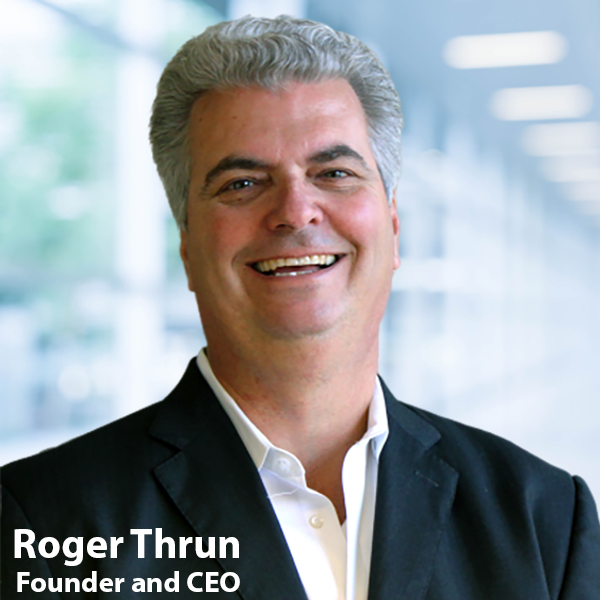
    Professional headshot photo of Roger Thrun, CEO of WHR Global

    Donations to St. Marcus School

    St. Marcus School, founded in 1872, is the largest urban Lutheran school in the U.S. “What makes St. Marcus so unique,” says Superintendent Henry Tyson, “is demonstrated by our exceptional results in a place that’s proven tough to get good results.” The government does not give enough financial support to deliver an exceptional education to each child, explains Tyson, but WHR’s philanthropic contributions have helped to bridge that gap. “Access to great education in a city where a great education is hard to find is transformational,” says Tyson.

    The school, with two campuses just four blocks apart, is located in a predominantly low-income, inner-city neighborhood with a vision of working to ensure that every family has access to high-quality education in the city of Milwaukee. Its 2019-2020 State Report Card received five stars, meaning “significantly exceeds expectations.” Few schools in the inner city and even fewer that are low income and predominantly African American receive this type of State Report Card, explains Tyson. St. Marcus follows graduates for eight years and reports a 90% high school graduation rate.

    WHR’s employees also participate in the St. Marcus Christmas Angels program. “Lots of our families are on tight budgets, and they cannot always bless and celebrate their children during the holidays with presents, and that can be upsetting. WHR has stepped in and said, ‘we will give and share what we have with people who have a lot less,’” says Tyson. Tyson believes the City of Milwaukee and our country have significant segregation. “It’s so beneficial for employees of WHR to meet and interact with our families, since it creates bridges. Anytime you can build bridges, it’s transformational for the students and their families.” WHR is a suburban company west of Milwaukee, Wis.

    WHR Founder and Owner, Roger Thrun, who is originally from Chicago and raised lower middle class, reflects on WHR’s philanthropic efforts with both St. Marcus and Mayo Clinic. “It doesn’t matter what color someone’s skin is, all that matters is that our money and efforts are going to great causes and that we can help someone,” says Thrun. “I feel fortunate that WHR is able to help people in other communities and I can see tangible results from our philanthropic efforts. I know that St. Marcus School is influencing and shaping kids to be successful for the rest of their lives.” A cancer survivor himself, Thrun understands how important it is to receive good healthcare. “I also know that on any given day, someone is getting a personalized cancer plan that WHR paid for through our research funding program. This program saves lives.”

    Funding Cancer Research at Mayo Clinic

    Mayo Clinic’s Hepatobiliary and Pancreas Surgeon, Surgical Oncologist, Dr. Mark J. Truty’s, M.D., M.S., revolutionary research practice has found a proven way to help pancreatic cancer patients who have been told elsewhere that they are out of options. “There is such a stigma associated with pancreatic cancer,” says Truty. With the standard level of care, the survival rate is 5% after 5 years, dependent on the cancer Stage, explains Truty. His research practice has found a way to significantly increase those survival odds, giving patients much more time to enjoy their lives – even for some patients who have been told their cancer was inoperable. “WHR’s generous philanthropic contributions have made a massive impact and help to keep my program alive,” says Truty. The contributions have also drawn attention to Truty’s program. Many researchers are clamoring for support but having a benefactor like WHR points a finger at the program and makes it easier. “Lots of medical research is going into discovery, but I want to see something translational,” says Truty, who explains his research directly helps patients now.

    Pancreatic cancer treatment is typically done serially. One drug is used, and if that doesn’t work, a second drug is tried. “The clock is ticking and time is lost with this method of treatment,” says Truty. His approach addresses the problem quite differently. A patient is given personalized chemotherapy treatments that have already been proven in Truty’s research lab to provide a high probability of effectiveness for that individual in shrinking the tumor before surgery. “The standard level of care is not good enough, we need to give patients something exceptional,” says Truty.  He is grateful for WHR’s support saying, “WHR’s owner Roger Thrun understands there’s something more important than just running a successful business, Roger understands the importance of giving back.”

    “Yes, we buy real estate, yes, we help transferees find movers, but when you boil it down, we’re just helping people. Dr. Truty of Mayo Clinic and Henry Tyson of St. Marcus School are truly making a difference in people’s lives. Dr. Truty is saving lives and St. Marcus School is influencing kids who are already at a serious disadvantage and providing them with a positive launching pad for the rest of their lives,” says Thrun. Thrun is grateful for all his employees and clients. He is proud WHR is still going strong 25 years later and able to make such a positive impact in other communities.

    About WHR Group Inc.

    WHR Group Inc. (WHR) is a privately owned, client-driven global relocation management company distinguished by its best-in-class service delivery and cutting-edge, proprietary technology. WHR has offices in Pewaukee, Wis. (global headquarters), Zurich, Switzerland, and Singapore. With its 100% client retention rate for the past decade, WHR continues to position itself as the trusted provider in employee relocation. To learn more about WHR, visit https://whrg.com, or follow @WHRGroup on LinkedIn, Twitter and Facebook.