When Air Traffic Disruptions Affect Employee Air Shipments

The recent nationwide air traffic outage disrupted flights across the United States and created ripple effects beyond passenger travel. For corporate mobility programs, it also offered a reminder that aviation disruptions can affect international air shipments for relocating employees.

The FAA’s November 13, 2026 ground stop lasted more than four hours following a telecommunications outage affecting air traffic control operations. Although flights resumed that evening, airlines continued repositioning aircraft and crews and working through cancellations and delays in the days that followed.

Air cargo was caught in that same disruption.

Because air cargo often moves within the same aviation network as passenger travel, widespread flight disruptions can affect available cargo capacity and create backlogs even after passenger schedules begin returning to normal. 

During the disruption, freight moving to, from, or through the United States faced the potential for delayed departures, cargo being moved to later flights, and missed connections at U.S. hubs. Short-term capacity restrictions were also possible as airlines worked to reposition aircraft and crews. 

For mobility teams, the event highlights something that can be easy to overlook: an employee’s flight may be back on schedule before their air shipment is.

Why This Matters for Corporate Mobility

Air shipments serve an important purpose in an international relocation. They give employees access to essential belongings, such as clothing, work-related items, and other necessities, while they wait for their primary household goods shipment to arrive. That makes timing particularly important. 

An employee may arrive at the destination as planned while an air shipment is still working through a disrupted transportation network. For shipments requiring connections through major gateways, a missed flight can push freight to a later departure depending on available capacity. 

Cargo displaced from one flight may also need to wait for space on a later departure, which is why shipment recovery can lag behind the return of normal passenger schedules.

The disruption may be relatively brief, but even a short delay matters when an employee is counting on those belongings during the first days of an assignment.

What Mobility Teams Should Expect From Their RMC

Events like the recent outage are a good example of why shipment visibility matters.

Corporate mobility teams should not have to track individual flights or determine whether an employee’s shipment has been affected. Their relocation management company should be monitoring shipments, identifying potential disruptions, and coordinating the response when transportation networks are affected. 

When an unexpected transportation event occurs, an RMC should have visibility into: 

  • Air shipments already in transit, particularly those moving through an affected transportation network.
  • Shipments connecting through affected gateways, where delays can result in missed onward connections.
  • Time-sensitive employee shipments, especially when the employee has already arrived at the destination.
  • Changes to expected shipment timelines that need to be communicated to the employee or mobility team.

For mobility leaders, the important question isn’t necessarily Where is this shipment right now? It’s whether their RMC has the shipment visibility and transportation expertise to answer that question when it matters.

The Bigger Lesson for Mobility Programs

The November outage is one example of a much broader challenge. Air traffic outages, severe weather and other aviation disruptions can create downstream effects throughout the freight network. Flights may return to normal while cargo affected earlier is still waiting for its next available connection. 

Transportation disruptions are not always predictable. What matters is how quickly the potential impact can be identified and communicated. When something unexpected happens, mobility teams should be able to rely on their RMC to understand which employee shipments may be affected, coordinate with the appropriate transportation providers, and communicate meaningful updates. 

For the relocating employee, that communication matters. Air shipments often contain the belongings they specifically selected because they expected to need them shortly after arriving.

How WHR Global Supports Your Program
Working with a Relocation Management Company (RMC) like WHR Global, can help your mobility team streamline the complex employee relocation process while controlling costs

Have questions about employee air shipments or your household goods program?

Visibility Matters When the Unexpected Happens.

Transportation disruptions will happen. How they are managed can make the difference.

WHR Global works with its transportation network to maintain visibility into employee household goods shipments throughout the relocation process. When unexpected events affect transportation networks, our focus is on understanding the potential impact, coordinating with the appropriate providers, and communicating relevant changes to mobility teams and relocating employees.

For mobility teams, that means less time chasing shipment updates and greater confidence that someone is paying attention when conditions change.


Mobility Education Series: Home Sale Benefits

What Are Home Sale Benefits?

Selling a home can be one of the biggest hurdles facing an employee who is relocating. Beyond the financial significance, employees may be managing showings, negotiations, inspections, closing requirements, and move planning while preparing to start a new role. Home sale benefits provide eligible homeowners with support during this process, helping reduce some of the financial risk and administrative burden associated with selling a primary residence for a work-related move.

Three common options for home sale benefits:

Buyer Value Option (BVO): The employee markets the home and secures an outside buyer. Once a qualified offer is received and program requirements are met, the home sale is completed through the relocation program. When properly structured and administered, a BVO can provide favorable tax treatment for the employer.

Guaranteed Buyout (GBO): The employee typically markets the home for a defined period while an appraised value is established. If an outside buyer is not secured according to program requirements, the employee may have the option to accept the guaranteed offer.

Direct Reimbursement (DR): The employee sells the home and is reimbursed for eligible selling expenses according to the relocation policy.

Mobility Education Series_Understanding Home Sale Benefits


Home Sale Benefit Types: BVO – GBO – DR

For mobility managers, the key distinction between the three types of home sale benefits is that each approach creates a different level of employee support, employer involvement, cost, and financial exposure.

Who Typically Receives Home Sale Assistance?

Not every relocating homeowner receives the same home sale benefit. Eligibility may depend on policy tier, employee population, type of move, or other program criteria. The WHR Global Mobility & Culture Benchmark shows how eligibility can vary by program.

Among organizations offering BVOs, 97% make the benefit available to existing employees and 95% to new hires, compared with 81% for executives and 70% for non-executives. GBO eligibility is more concentrated: 100% of organizations offering GBOs make them available to executives and existing employees, while 87% extend them to new hires and only 27% to non-executives. 

DR is also broadly available among organizations offering it, with 96% extending the benefit to existing employees, 87% to executives, 83% to new hires, and 61% to non-executives.

The data shows that homeownership alone does not determine eligibility. The type of program and employee population also influence the assistance provided.

Why Home Sale Support Matters?

An unresolved home sale can complicate the entire relocation.

Employees may be carrying housing expenses in two locations or trying to manage a significant real estate transaction from a distance.Delays may also affect when the employee and family feel able to fully transition to the new location.

A structured benefit gives employees clearer guidance through the transaction and can help prevent an unresolved home sale from delaying the broader relocation.  The key guidelines help establish expectations before a home enters the relocation program.

Before Designing Home Sale Benefits, consider:

  • Who should be eligible?
  • Which home sale approach fits each policy or employee population?
  • What selling expenses will the organization cover?
  • What marketing requirements must employees follow?
  • How will exceptions or challenging properties be handled?
  • What level of financial exposure is the organization prepared to accept?

Why BVOs and GBOs Require Careful Administration

BVO and GBO programs are structured transactions, not simply enhanced reimbursements.

The timing and sequence of the home sale matter, particularly when the organization intends to preserve favorable tax treatment. Depending on the program, appraisals, buyer offers, inspections, property eligibility, documentation, and closing procedures may all need to follow established requirements. 

The Relocation Management Company, like WHR Global, coordinates the process with the employee and the real estate and closing professionals involved. Because timing and documentation matter, that coordination must begin early rather than waiting until closing.

How Are Home Sale Programs Evolving?

The WHR Global Mobility & Culture Benchmark indicates that organizations continue to evaluate structured home sale programs. For BVO home sale benefits, 64% of respondents reported no change, 31% said they were trending down, and 6% said they were trending up. For GBO benefits, 50% reported a downward trend, 49% reported no change, and 2% reported an upward trend. Percentages may vary slightly from 100% due to rounding. 

Cost pressure may be one factor influencing that direction. Across the benchmark, 66% of respondents said they face internal pressure to reduce global mobility costs, and 10% said their organization had eliminated GBO home sales entirely as a cost-saving measure.

This reflects the greater financial exposure associated with a guaranteed offer. For mobility managers, the takeaway is not that one approach is automatically better. The level of home sale support should align with employee needs, program costs, and the organization’s tolerance for financial exposure.

How WHR Global Supports Your Program

For mobility managers who are new to relocation, the starting point is understanding that Direct Reimbursement, BVO, and GBO offer different ways to help an employee sell a home and move forward with a relocation. Each approach carries its own level of employee support, administrative complexity, cost, and financial exposure. Clear eligibility rules and well-defined processes help organizations provide meaningful assistance while maintaining appropriate oversight of the benefit.

Working with an experienced Relocation Management Company (RMC), like WHR, can help organizations navigate these options with greater confidence and consistency. WHR provides guidance on program design, policy development, vendor coordination, and compliance considerations, helping mobility teams make informed decisions that align with business objectives and employee needs. 

For organizations with limited relocation experience or lean mobility resources, this expertise can reduce administrative burden, minimize risk, and create a more positive experience for relocating employees. WHR also serves as a strategic partner throughout the home sale process, helping organizations evaluate which approach best fits different employee populations, relocation volumes, and budget requirements. By managing timelines, coordinating with real estate and appraisal partners, monitoring policy compliance, and providing ongoing communication, WHR helps ensure home sale benefits are administered effectively and consistently. The result is a relocation program that supports talent mobility, improves the employee experience, and helps organizations balance cost control with meaningful support.

Mobility Education Series: Temporary Housing

What is Temporary Housing?

Starting a new job or assignment in a new location does not always line up perfectly with finding a permanent place to live. An employee may arrive before their new home is available or be waiting for household goods to arrive. Temporary housing helps bridge that gap. 

For mobility managers, temporary housing provides employees and their families with stability during a period of transition while giving them time to make informed decisions about permanent housing. 

Temporary housing is a short-term living arrangement provided to a relocating employee while they transition from their previous residence to permanent housing in the new location. 

It is typically furnished and includes utilities and other essentials, providing a move-in-ready solution. Depending on the destination and the employee’s needs, accommodations may include a furnished apartment, serviced apartment, or other extended home stay option. 

The goal is simple: give employees a comfortable place to live while the other pieces of their relocation come together.

WHR Global Mobility Education Series Understanding-Temporary Housing

Why Organizations Provide Temporary Housing

Relocation timelines rarely fall neatly into place. An employee may need to begin work before a home purchase closes or a lease begins. A family may want time to explore neighborhoods before deciding where to live. An international employee may also be waiting for household goods to arrive. 

Temporary housing gives employees time to navigate these situations without feeling pressured to make an immediate permanent housing decision. It also allows them to focus on their new role while the remaining pieces of the relocation fall into place.

When Is Temporary Housing Typically Used?

Temporary housing can support a variety of relocation situations, including:

  • Domestic transfers when permanent housing is not yet available
  • New hires who must begin work before securing a home
  • International assignees searching for long-term accommodations
  • Employees waiting for household goods to arrive
  • Families experiencing a gap between departure and destination housing

How much time should an organization provide?
There is no universal answer, but the 2026 WHR Global Mobility & Culture Benchmark provides a useful reference point. Respondents offer an average of 39 days of temporary housing, with a median of 30 days. Reported benefits ranged from as few as 5 days to as many as 90. 

Before Arranging Temporary Housing, consider:

  • When does the employee need to report to the new location?
  • When will permanent housing realistically be available?
  • Is the employee relocating alone or with family?
  • What commute and transportation needs should be considered?
  • Will household goods still be in transit? 

Looking at the entire relocation timeline can help determine both the right accommodation and the appropriate length of stay.  For mobility managers, that range is important. The right amount of time depends on the employee’s circumstances, destination housing market, relocation policy, and the other elements of the move.

Setting Clear Temporary Housing Guidelines

Family size matters.

2026 WHR Global Mobility & Culture Benchmark found that 88% of respondents take family size into account when determining temporary housing size and budget.

For example: A single employee, a family of four or even a family that includes furry friends are unlikely to have the same temporary living needs.

Factoring household size into the benefit can help organizations provide appropriate accommodations while establishing clearer policy parameters.

While individual circumstances vary, a temporary housing policy should clearly establish who is eligible, how long accommodations are provided, and what types of housing and costs are covered. It should also explain when an extension may be considered and who has authority to approve it. 

Interestingly, a fixed housing budget is far from universal. According to WHR’s 2026 Benchmark, 71% of respondents do not give employees a set budget for temporary housing, compared with 29% that do. Among organizations establishing budgets, approaches vary, including cost estimates, city-specific budgets, and options provided by the temporary housing company. 

That reinforces an important lesson for new mobility managers: temporary housing often requires enough structure to control costs without ignoring differences among locations and employee circumstances.

Potential Temporary Housing Challenges

Availability and cost can vary significantly by destination, season, length of stay, and employee requirements. An accommodation suitable for an individual employee may not work for a family, while commute, transportation, and space requirements can affect both availability and cost. 

Relocation plans can also change. A lease may be delayed, a home closing may move, or an international household goods shipment may take longer than expected. 

Clear communication and early planning help mobility managers respond to these changes while minimizing disruption for the employee.

How WHR Global Supports Your Program

The Relocation Management Company (RMC), like WHR Global, typically coordinates temporary housing within the organization’s policy guidelines and the employee’s needs. 

This may include identifying appropriate accommodations, coordinating bookings, monitoring the authorized stay, and helping resolve issues that arise. The RMC can also provide mobility teams with visibility into temporary housing costs and extensions. 

That oversight is particularly valuable when circumstances change, since additional days of housing can quickly increase the cost of a relocation.

For mobility managers who are new to relocation, temporary housing may initially seem like a straightforward benefit. In practice, it connects several important parts of a move, including the employee’s start date, home search, household goods shipment, family needs, and overall relocation timeline.

The 2026 Benchmark reinforces why there isn’t a single formula for temporary housing. Duration, budget, destination, and family needs can all shape how the benefit is structured. The key is remembering that temporary housing is more than a place to stay. It provides employees and their families with stability and valuable time to get established before transitioning into permanent housing.

Mobility Education Series: Destination Services

What Are Destination Services?

Arriving in a new city or country is only the beginning of a relocation. Employees still need to determine where to live, understand their new surroundings, navigate unfamiliar processes, and establish the routines of everyday life. For employees moving internationally, differences in language, culture, housing practices, banking, healthcare, and local requirements can make that transition even more challenging. 

Having knowledgeable, local support can make those unfamiliar decisions and processes easier to navigate, helping employees and their families feel more confident as they settle into their new location. 

Destination services are relocation services provided at the employee’s new location to help them find housing, become familiar with the area, and complete many of the practical tasks involved in settling in. 

Depending on the destination, relocation policy, and employee’s needs, services may include: Area Orientation, Home-Finding or Rental Assistance, School Search Support, Spouse/Partner Support, Language or Cultural Training, and Settling-In Services. 

WHR Global Mobility Education Series Understanding-Destination Services

These services are typically coordinated by the Relocation Management Company and delivered by local on-the-ground destination service partners (DSP’s) with firsthand knowledge of the destination. Destination services are particularly valuable because they combine relocation support with knowledge of the local market.

Why Destination Services Matter

Employees do not experience relocation as a collection of individual benefits. They experience everything that comes with establishing a new life in an unfamiliar place.
Where should we live? How long will the commute be? Which neighborhoods fit our needs? How do we enroll our children in school? How do we establish local services?

These everyday questions can quickly become significant sources of stress, particularly when an employee is simultaneously adjusting to a new position.
Destination services provide employees and families with local guidance when they need it most.

Instead of navigating an unfamiliar housing market or local processes alone, they have someone who understands the destination and can help them make informed decisions.

Destination Services Are About More Than Finding a Home

A successful relocation depends on more than securing a property.

Commute, schools, transportation, neighborhood characteristics, access to everyday services, and family priorities can all influence whether a location works for an employee.

Looking at the destination as a whole can help employees make better long-term housing decisions.

What Does Destination Support Look Like?

The appropriate level of destination support depends on the move. 

An employee relocating domestically may primarily need an orientation to the area and assistance finding housing. Someone moving internationally may face additional challenges involving local registrations, banking, healthcare systems, schools, or unfamiliar rental practices. 

Consider an employee relocating with their family from Tokyo to Toronto. Beyond finding a residence, the family may benefit from an orientation to different neighborhoods, assistance navigating the rental market, school information, and guidance on establishing themselves within the community. 

The value of destination services is not simply completing these tasks for an employee. It is providing knowledgeable local assistance so the employee and family can make confident decisions.

The Importance of the Family Experience

Before Destination Services Begin, Ask:

  • Who is relocating with the employee?
  • What are the family’s most important housing priorities?
  • Are schools part of the decision?
  • What commute or transportation requirements should be considered?
  • Are there local processes the employee may be unfamiliar with?

Understanding these priorities early helps the destination service provider make the time spent with the employee more productive

A relocation decision rarely affects only the employee. A spouse or partner may be adjusting to an unfamiliar community, children may be entering new schools, and the entire family may be rebuilding routines and social connections.

That makes the family’s experience an important consideration when determining destination support.

Home-finding and school-search decisions, for example, can be closely connected. A location that looks ideal based solely on its proximity to the office may not work well when schools, transportation, or other family priorities are considered.

For mobility managers, understanding the employee’s broader circumstances can help ensure destination services address the realities of the move rather than just the logistics.

The Role of Local Expertise

Destination services are particularly valuable because they combine relocation support with knowledge of the local market. 

Experienced local providers can provide context that may be difficult for an employee to discover through online research alone. They can help employees understand different neighborhoods, housing practices, transportation options, and local procedures while providing practical guidance throughout the settling-in process. 

The Relocation Management Company coordinates these services based on the organization’s policy and the employee’s authorized benefits, helping connect the employee with appropriate local resources and maintain consistency across the relocation program.

Setting Clear Destination Service Guidelines

As with other relocation benefits, organizations should establish clear guidelines around destination services.

Policies may identify which employees are eligible, which services are available, and how much support is authorized. The appropriate level of assistance can vary based on the type of relocation, destination complexity, family circumstances, and business need.

Clear guidelines help employees understand the assistance available to them while allowing mobility teams to provide meaningful support without creating an open-ended benefit.

How WHR Global Supports Your Program

For mobility managers who are new to relocation, destination services are an important reminder that a successful move involves more than transporting an employee and their belongings from one location to another.

Employees and their families need to establish a new home, understand their surroundings, and begin building a life in an unfamiliar location. The right destination support can provide the knowledge and guidance they need to navigate those decisions with greater confidence.

The key is remembering that destination services are not simply about introducing someone to a new city. They help employees and their families move from arriving in a new location to actually feeling established there.

At WHR, we combine personalized relocation counselor support with a trusted destination services network to help employees and their families settle in with confidence. By providing guidance, local expertise, and proactive coordination, we create a smoother transition while helping mobility teams reduce complexity and enhance the employee experience.

What Protests in Europe Could Mean for Employee Relocation

Updated October 30, 2026

Demonstrations across several European countries are creating localized disruption and drawing attention to broader housing and cost-of-living pressures.

Demonstrations across parts of Europe continue to make headlines, but for global mobility teams, the bigger question is what they mean for employees relocating into these markets. 

While the issues vary by country, recurring concerns include education, housing, the cost of living, public services, and economic opportunity. Recent demonstrations have taken place in France, Spain, Italy and other European countries, with the unrest particularly significant in France. 

The situation also remains fluid. Further demonstrations are expected in France, while protests are scheduled across Germany on October 31. German authorities currently do not expect the demonstrations to affect air or metro/rail travel, although road closures and localized public transportation disruptions could occur near protest areas, sometimes on short notice.

What Protests in Europe Could Mean for Employee Relocation and how WHR Global is supporting clients and their employees
Current conditions still do not point to widespread disruption of corporate relocations across Europe. Instead, the potential impact is more local: Could a demonstration or transportation change affect a particular employee’s arrival, home search, destination services, or overall relocation experience?

Where Relocations Could Feel the Impact

Transportation remains one of the most immediate considerations.

In cities experiencing larger demonstrations, road closures, temporary transit changes, police activity, or restricted access to certain areas can make getting around more difficult. France continues to warrant particular attention. Protests that began over conditions in the education system have broadened to include trade unions, Yellow Vest activists and wider concerns surrounding living costs and public services.

The movement also shows little sign of ending. Additional French demonstrations have been called for October 31, followed by a nationwide strike and demonstrations on November 5. For a local resident, changing a route may be a relatively minor inconvenience. For an employee arriving with a family, luggage, and limited familiarity with the destination, it can feel considerably more disruptive.

Airport transfers, home-finding tours, area orientations, school visits, and other destination services may need to be rerouted or rescheduled. The key is responding to what is happening around the individual employee rather than assuming an entire city or country is affected.

What This Means for Mobility

The issue isn’t whether companies can continue relocating employees into Europe. It’s whether a local demonstration, transportation change, or access restriction could affect a specific employee’s arrival or scheduled relocation services.

Household Goods: Monitor, Don’t Assume Disruption
Current conditions still do not indicate widespread disruption to international household goods transportation as a result of these demonstrations. That distinction is important. A protest affecting traffic in a city center is very different from sustained disruption involving ports, airports, trucking networks, rail freight, or international transportation corridors. However, the situation in France is becoming more relevant from a logistics perspective because the protest movement has broadened and further labor action is planned. 

Mobility teams should therefore continue watching for activity that reaches transportation or logistics infrastructure. Until those networks are materially affected, it would be premature to assume household goods shipments will be delayed simply because demonstrations are occurring in an employee’s destination. 

Housing May Be the Bigger Mobility Story
While demonstrations can create the most immediate disruption, the economic pressures behind some of them could have longer-term implications for mobility programs. Housing affordability and cost-of-living pressures continue to feature prominently in the broader European unrest. Reporting on October 30 identified rising living costs, housing, and pressure on public services among issues fueling public frustration across several countries. For employers, those pressures can matter long after a demonstration ends. 

When housing costs outpace established allowances, employees may struggle to find appropriate accommodations within policy parameters. For employers, that can translate into longer home searches, additional temporary living, policy exceptions, or questions about whether housing budgets reflect current market conditions. 

Families may face another layer of considerations involving schools, commute times, transportation access, and the availability of properties that meet their needs. These challenges existed before the current demonstrations and should not be attributed to them. But the protests provide another reminder of the economic realities employees may encounter when relocating into some European markets.

The Bigger Mobility Question

A demonstration may disrupt transportation for hours or days. Housing affordability and sustained cost-of-living pressures can influence an employee’s experience throughout an assignment. 

Don’t Overlook the Employee Experience
Relocation is already a period of significant change for employees and their families. Arriving in an unfamiliar city during a period of visible unrest can add another layer of uncertainty, even when there is little direct impact on the move. An employee may encounter demonstrations, police barriers, transportation changes, or an increased security presence without understanding what is happening or whether their plans are affected.

This is where proactive communication matters.

Employees do not need an alert about every demonstration occurring in their destination. They do need timely information when something could affect an airport transfer, temporary housing arrival, home-finding appointment, school visit, or other relocation service. Clear communication can help employees understand what is happening, what it means for their move, and what alternatives are available without creating unnecessary concern.

What Mobility Teams Can Do Now

Stay close to local conditions. National headlines do not always reflect conditions where a particular employee is moving. Work with local destination partners to understand whether a demonstration could affect an arrival, home search, school visit, or scheduled service.

Communicate when it matters. Focus on information relevant to the employee and their relocation rather than passing along every development occurring in the destination. Watch transportation and labor activity. The planned November 5 action in France makes this particularly important. Broader labor involvement can create a different mobility risk than localized street demonstrations.

Keep an eye on housing. Continued affordability pressures can influence housing allowances, temporary living, home-finding timelines, and the overall employee experience.

Local Knowledge Makes the Difference
Headlines can make local disruption appear much broader than it actually is. For mobility teams, a better approach is to understand what is happening where employees are actually moving and respond when those conditions intersect with an individual relocation.

As of October 30, 2026, current conditions do not suggest companies need to broadly reconsider relocating employees into Europe. Tomorrow’s demonstrations in Germany are not currently expected to disrupt air or metro/rail travel, while France remains the market to watch more closely as demonstrations continue and broader labor action approaches.

For employees and their families, timely information and knowledgeable local support can make the difference between encountering disruption on their own and having someone ready to help them navigate it.

How WHR Is Supporting Relocating Employees

WHR works with its global partner network and local destination consultants to stay close to conditions that could affect individual moves. When circumstances change, our teams can coordinate with destination and service partners, communicate with relocating employees, adjust scheduled services when needed, and help identify practical alternatives. WHR’s existing destination services model uses local, on-the-ground consultants, while its disruption-response approach emphasizes current updates, proactive communication, and flexibility when conditions affect a move. 

The goal is straightforward: keep employees and their families informed, supported, and moving forward even when conditions around them change. 

NOTE: Conditions surrounding demonstrations can change quickly. Mobility teams and relocating employees should confirm current local transportation and security information before scheduled arrivals or services.

Mobility Education Series: Understanding Household Goods Shipments

What is a Household Goods Shipment?

For employees preparing to relocate, few parts of the process feel more personal than moving their belongings. From furniture and clothing to family keepsakes, safely moving an employee’s personal belongings is an important part of the relocation experience. 

For mobility managers, household goods transportation is more than arranging a moving truck. Depending on the move, it can involve packing, transportation, storage, delivery, customs requirements, insurance, and coordination among multiple service providers. Understanding how household goods shipments work can help you better support relocating employees while managing cost, quality, and risk.

A household goods shipment is a relocation benefit that covers the packing, transportation, and delivery of an employee’s personal belongings from their current residence to their new home. 

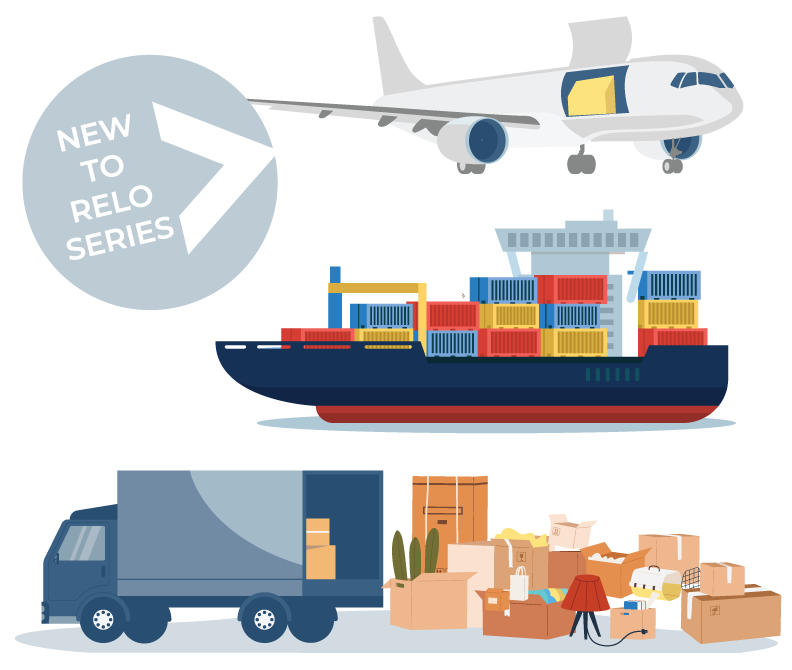
WHR Global Mobility Education Series Understanding-Household Goods Shipments via truck, shipping container or airplane

The scope can vary considerably.  A straightforward U.S. domestic move may involve packing a home, transporting the shipment by truck, and delivering and unpacking it at the destination.  An international move can be more complex, potentially involving air or sea freight, customs clearance, insurance, and temporary storage.  The goal remains the same: safely move an employee’s belongings while allowing them to focus on the other personal and professional demands of relocation.

Why Household Goods Support Matters

Relocating for work affects much more than where an employee reports each morning. Employees may be selling or leaving a home, finding housing in an unfamiliar community, coordinating travel, helping family members adjust, and preparing for a new role at the same time.

Managing the physical move independently adds another responsibility.

Household goods support gives employees access to experienced moving professionals who can coordinate the shipment and help them navigate the process. For employers, professionally managed shipments can help establish consistent service standards and provide greater oversight of one of the most significant logistical components of a relocation.

What Can a Household Goods Move Include?

The exact services depend on the organization’s relocation policy and the employee’s circumstances, but a household goods move may include:

  • Pre-move planning and coordination
  • Packing and loading
  • Transportation
  • Delivery and unloading
  • Temporary storage (called Storage in Transit or SIT)
  • Insurance or valuation coverage
  • International customs coordination
  • Air or sea freight for international moves

Some relocations require only a portion of these services. Others may involve several moving components at once.

An employee moving internationally, for example, could need a smaller air shipment containing essential belongings that are needed quickly, while the majority of the household travels separately by sea. Temporary storage could also be required while permanent housing is secured. For new mobility managers, this is an important distinction: a household goods shipment is not necessarily a single shipment or service.

Questions to Ask When Reviewing a Household Goods Benefit

Before determining the appropriate level of support, consider:

  • What types of moves does the organization typically sponsor?
  • Are weight or shipment limits defined by policy?
  • When is temporary storage available?
  • Are there items the policy does not cover?
  • How are international shipping and customs needs addressed?
  • What support is available if belongings are lost or damaged? 

Clear parameters can help employees understand their benefits before the moving process begins.


Domestic and International Shipments Are Different

At a high level, domestic and international household goods moves accomplish the same thing: moving an employee’s belongings from one home to another. The logistics involved, however, can be very different.

A U.S. domestic move may primarily involve ground transportation between the departure and destination locations.

International shipments can introduce additional considerations. The employee may need different shipping methods based on how quickly certain belongings are needed. Customs requirements can affect what can be shipped and how items enter the destination country. Storage may also become more important when there is a gap between the employees’ departure and access to permanent housing.

For mobility managers, recognizing this added complexity is important when evaluating policies, setting employee expectations, and determining the appropriate level of support.

The Role of the Relocation Management Company

Don't Overlook Timing

The household goods timeline should be considered alongside the employees’ broader relocation timeline.

An employee may leave the departure location before permanent housing is available at the destination. International transit times can also affect when belongings arrive.

Thinking about shipment timing early can help determine whether temporary storage, temporary housing, or another solution may be needed


The Relocation Management Company (RMC) helps coordinate the household goods process from beginning to end.

Rather than requiring the employee or internal mobility team to manage the various parties involved in a shipment, the RMC works with moving partners to coordinate services and monitor the move. This can include helping arrange the shipment, maintaining service standards, monitoring progress, addressing issues, and providing support throughout the process.

For an international move, that coordination becomes particularly valuable when several services must work together, such as air freight, sea freight, temporary storage, and customs requirements. The objective isn’t simply to get belongings from Point A to Point B. It’s to create a coordinated experience with clear accountability throughout the move.

What Should Mobility Managers Consider?

Household goods policies need enough structure to manage costs and maintain consistency while still accommodating the different circumstances employees can encounter.

Important considerations include:
Eligibility: Who receives household goods support, and does the level of support vary by policy or employee population?
Limits: Does the policy establish parameters around shipment size, weight, storage, or covered services?
Exceptions: How will requests outside the standard policy be reviewed?
Communication: Does the employee understand what is included, what is excluded, and what responsibilities they have during the move?
International requirements: How will customs, documentation, and different transportation methods be handled when employee’s cross borders?
Claims: What process is available when belongings are lost or damaged?

Establishing these guidelines before a move begins can help create clearer expectations for everyone involved.

Potential Household Goods Challenges
Even a carefully planned household goods shipment can encounter challenges. Delivery schedules can change, permanent housing may not be ready, items can be damaged, and international shipments may face additional logistical or customs considerations.

Good communication is particularly important.
Employees should understand the process, know what to expect at important stages of the move, and know where to turn when an issue occurs. Mobility teams should also have visibility into the move so problems can be addressed without requiring the employee to coordinate multiple providers independently.

Building a Strong Household Goods Program

For organizations, an effective household goods program starts with clearly defined benefits and continues through thoughtful execution. Employees should understand the scope of their benefit before the move begins, including any limits or exclusions that could affect their decisions. Moving partners should be selected and monitored with service quality in mind. And mobility managers should have sufficient visibility into the process to understand costs, identify issues, and evaluate the employee experience. 

The right approach will vary by organization and employee population, but the underlying objective remains consistent: move the employee’s belongings safely and efficiently while reducing the logistical burden placed on the relocating employee.

How WHR Global Supports Your Program

For mobility managers who are new to relocation, household goods shipments are an important benefit to understand because they combine logistics, policy, cost management, risk, and employee experience.

The process may be relatively straightforward for one employee and significantly more complex for another, particularly when an international move introduces multiple shipping methods, storage, or customs requirements.

The key is remembering that household goods management is about more than moving belongings. Thoughtful planning, clear communication, reliable service partners, and active coordination can help make one of the most personal parts of an employee’s relocation easier to navigate.

At WHR, we guide clients through these complexities with experienced move management Relocation Counselors, a carefully vetted global supply chain, and proactive oversight from origin through destination. By combining personalized support with disciplined program management, we help mobility teams reduce administrative burden, control costs, and deliver a positive relocation experience for their employees.