Navigating Employee Relocations: Lump Sum vs. Managed Budget

Lump Sum and Managed Budget: Flexibility Without Losing Control

When it comes to employee relocations, companies often face the decision between offering a lump sum or a managed budget. Each approach has its unique advantages and considerations.

In this blog post, we’ll explore:

  • the key differences between lump sum and managed budget relocations
  • how each of these options fit within a corporate mobility program and may benefit both the company and the employee
  • how partnering with a relocation management company, like WHR Global, streamlines relocation processes and enhances cost efficiency

Lump Sum and Managed Budget Relocation Benefits

Lump Sums

Lump Sum Relocations: A Brief Overview

Lump sum relocation benefits are popular for a reason. This approach involves providing employees with a one-time payment, predetermined cash allowance to manage their relocation independently.  

Lump sums are commonly viewed as a cost-saving measure rather than a standalone benefit. They are easy to communicate, faster to launch, and they can reduce administrative lift for mobility and HR teams. However, there are challenges associated with lump sum relocations:

Lump Sums Offer Limited Support:

With a lump sum, employees may experience limited support from the Relocation Management Company (RMC). While they can leverage a network of supplier partners, they often find themselves navigating the relocation process alone.

Employees May Experience Financial Pitfalls:

Employees receiving lump sums may struggle with understanding the true cost of relocation. This can lead to uneven spending, opting for the cheapest quotes without considering the overall experience, and even attempting to save cash rather than facilitating a smooth transition.

Employees Risk Using Rogue Movers:

Choosing the cheapest mover online can result in unforeseen issues. From untrained crews to unexpected additional charges, the lack of pre-move surveys can lead to complications, including goods being held hostage on the truck – a situation that is both inconvenient and illegal. 

Managed Budget

Managed Lump Sum: Striking a Balance

A managed lump sum, often called a managed budget program, keeps employee choice while adding structure. Rather than issuing funds and stepping back, the budget is supported by relocation expertise to help employees plan, select the right services, and keep spending aligned to the amount provided. Budgets can be created as one total or organized into components such as household goods, miscellaneous expenses, or spouse or partner support.

Managed lump sums provide a middle ground, offering both cost containment for the company and flexibility for the employee. Here’s why businesses should consider this approach:

Give Ongoing Support:

Unlike traditional lump sums, managed lump sums come with continuous support from the Relocation Management Company (RMC). This support extends throughout the entire relocation process, ensuring employees receive assistance, issue escalation, and regular status updates.

Leverage Expense Tracking:

The RMC utilizes technology to track dates and estimates, holding supplier partners accountable for delivering excellent service at transparent prices. This proactive approach minimizes the risk of unexpected costs and ensures a smoother relocation experience.

Offer Flexibility for Employees:

Managed lump sums allow employees to have more control over their relocation budget. They can pick and choose how to allocate their funds, providing a personalized experience that caters to individual needs.

Managed Lump Sums Deliver Cost Savings:

If an employee doesn’t utilize the entire managed budget, the remaining amount is captured by the employer as cost savings. This ensures that companies maintain financial efficiency while still prioritizing employee well-being.

When is a Managed Budget Worth it?

If your move population is higher-cost, higher-complexity, or higher-risk, added guidance and controls can protect both the employee experience and the company’s spend. Even for simpler moves, a managed approach can improve consistency and reporting. The key is to define what the benefit covers, set expectations for what happens if funds run out, and measure results so future budgets reflect real costs.

In the debate between lump sum and managed budget relocations, it’s clear that a managed lump sum offers a balanced solution. By combining ongoing support, expense tracking, and flexibility for employees, businesses can ensure successful relocations that benefit both the company and its workforce.

By adopting a managed lump sum strategy, organizations can ensure that their relocation benefits are both cost-effective and scalable, aligning with the needs of different employee tiers while maintaining a streamlined and equitable relocation experience for all.

As companies navigate the complexities of employee relocation, the managed lump sum emerges as a strategic and employee-centric choice.

How WHR Global’s Managed Budget Tool Provides Guidance and Control

WHR’s Managed Budget Tool helps keep everyone on the same page with a clear view of starting balance, spend, and remaining funds, including multi-currency support. 

  • Embedded in both WHR Client & Transferee Portals
  • Creates a trigger when projected spend is trending over budget and before end-of-move surprise
  • Budget can be set in 163+ currencies but converted and managed in USD only
  • Tracks employee reimbursements
  • Estimates costs until final billing
  • Capture only items you want reported
  • Supplier invoices paid directly

How WHR Global Helps You Control Costs and Improve Relocation Success
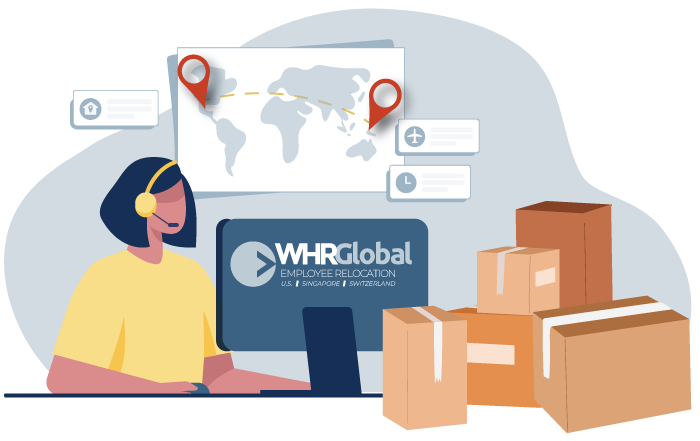
Working with a Relocation Management Company (RMC) like WHR Global, can help your mobility team streamline the complex employee relocation process while controlling costs

When a company partners with a Relocation Management Company (RMC), like WHR Global, to execute a managed lump sum program, they gain access to a suite of benefits designed to streamline relocation processes and enhance cost efficiency. RMCs’ expertise in managing lump sum programs ensures that funds are utilized effectively, with an experienced team negotiating favorable rates and handling all logistical details to reduce overall expenses.

By leveraging the RMC’s advanced technology and tools, they offer real-time tracking and reporting, providing organizations with transparency and detailed insights into every relocation. By implementing a managed lump sum approach, companies can achieve greater efficiency, cost savings, and overall satisfaction in their relocation programs.
WHR Global, a Client-Driven Global Mobility Management Company, Celebrates 30 Years Relocating Employees Across the World

MILWAUKEE, June 11, 2024 /PRNewswire/ — WHR Global (WHR), a relocation management company and leader in the global mobility and corporate relocation industry, announced the company’s 30-year anniversary.

WHR was founded in 1994 by Roger Thrun on a simple promise: to provide relocation services with an unmatched level of quality. To this day, this simple promise is commemorated with a framed 30-year-old note card on his desk which includes his 5 core values and business philosophy: empathy, trustworthy, proactive, hardworking, and results-driven.

Today, WHR Global has expanded its expertise and business philosophy globally with offices in Switzerland and Singapore. WHR’s 30-year record of success includes serving Fortune 500 global organizations and U.S. government agencies, with each client ranging from dozens to thousands of relocations and assignments per year.

WHR’s goal for the next 30 years includes a commitment to preserving a sustainable future for generations to come. The goal is to operate and relocate employees in a socially responsible manner while being cognizant of our own environmental impact and partnering with sustainable companies who are united in this belief.

“Thank you to our clients, employees, partners, and those we have helped relocate in the 30 years,” states Founder and CEO Roger Thrun.

“Our greatest success is people.”

Roger Thrun

Founder and CEO, WHR Global

About WHR Global

WHR Global (WHR) is a private, client-driven global relocation management company distinguished by its best-in-class service delivery and cutting-edge, proprietary technology. WHR has offices in the United States, Switzerland, and Singapore. With its 100% client retention rate for the past decade, WHR continues to position itself as the trusted leader in global employee relocation. We partner with human resources, travel divisions, and global mobility departments at a wide variety of organizations from Fortune 500 corporations to the U.S. government.

WHR lives by its vision and passion for Advancing Lives Forward® and Making the Complex Simple.

Contact WHR Global today for more information on global mobility and corporate relocation services or follow WHR on LinkedIn.

View WHR’s free resources for global mobility professionals in the Relocation Toolbox.

WHR Global,a leader in global mobility, is an independent, full-service relocation management company with offices in the US, Switzerland, and Singapore. WHR strives to offer cost-effective relocation benefits without compromising empathy, ethics, or service

2024 Partner In Quality Awards

WHR Global Selects Recipients of its 2024 Partner in Quality Awards

WHR Global (WHR) announced its 2024 Partner in Quality Award winners. Recipients are WHR partners who exceeded customer satisfaction and service excellence throughout 2023. To be considered for a Partner in Quality Award, a partner must complete at least 20 transactions in the previous year and receive performance rankings within the top one percentile of the relocation partner’s service category. The award winners listed below exceeded WHR’s expectations in cost management, customer satisfaction, quality, and supply chain management.


We are extremely thankful to our entire supplier network, but specifically to these companies that have gone above and beyond in service and partnership. Their dedication and commitment to excellence have helped WHR Advance Lives Forward® of countless relocating employees.

Young happy couple receiving new house keys from real estate agent.

2024 Partner in Quality Award Winners (in no particular order)

A Beginner’s Guide to Destination Services

Once you identify a candidate who is willing to relocate, the real work begins. There are two sides to every relocation: the departure side and the destination side. While departure benefits, such as home sales and lease breaks, are important, you can’t forget about the destination services your employee will require for a successful relocation. Ensuring that your employee is completely settled into the new location means you will have a happier, better adjusted employee.

Every move has its challenges, regardless if the move is U.S. domestic or overseas. Providing your employee with destination services goes a long way toward helping them to succeed, along with reducing any mobility risk factors. Because of this, many companies turn to a relocation management company, or RMC, to ensure all the pieces are in place.

A Beginner's Guide to Destination Services

Departure Services

For some countries, such as Switzerland and Singapore, departure services are critical to the success of your employee’s transfer or new assignment. RMCs such as WHR authorize departure services to our network of independent destination services providers. When the employee is prepared to vacate their property, the scope of work can include: assistance closing out lease agreements, return of deposits, final property walkthrough, key handover, property condition reports, and closing utility accounts. It’s also critical for your transferees to consider closing bank accounts, and filing change of residency or departure information as required by country. Last, but not least, WHR will review and recommend whether the employee and their family members should take immigration steps such as the cancellation of employment or dependent passes in their departure country. 

Area Orientation

Navigating the complexities of international assignments requires a thorough understanding of the destination. Area Orientation services play a pivotal role in facilitating a smooth transition for relocating employees and their families. Beyond aiding in the decision-making process, these services provide an invaluable opportunity for expats to visualize their upcoming life in a new city, state, and/or country.

Our Area Orientation services encompass comprehensive guidance on various aspects, ensuring a well-informed decision:

  1. About the Country: Offering insights into the broader cultural and societal aspects of the destination country.
  2. About the Area: Detailed information about the specific region, including local customs, attractions, and community dynamics.
  3. Housing Overview: Providing a comprehensive view of housing options, rental markets, and neighborhood considerations.
  4. Schooling Overview: Addressing educational facilities, curriculum options, and enrollment processes.
  5. Q & A Session: A personalized question and answer session, allowing relocating individuals to seek clarifications on specific concerns.

WHR’s Orientation Tours provide a realistic overview, empowering transferees to make informed decisions and kick-start their assignments seamlessly. Whether conducted in person or online, these tours contribute significantly to a stress-free relocation experience, aligning with the diverse needs of global mobility.

Spousal Assistance

One of the primary reasons an employee will turn down a relocation assignment or end up in a failed situation is because their spouse was not given enough support. Helping your employee’s spouse find new employment, build a résumé, network in the new location, learn a new language, or adapt to a new culture, can make all the difference for your transferring employee and their family. This will also help you avoid employees turning down a relocation and avoid losing out on great talent.

In WHR’s Culture + Mobility Benchmark report, we found that only 39% of companies offer spousal assistance to their international population. Because relocating internationally adds another level of stress for the employee’s family, we believe incorporating this benefit will go a long way in helping you secure the right person for the available role.

Home Finding

After your employee learns a little more about the city, they can start the home search. It can be difficult to make the transition to a new city. Working closely with local agents who know the ins and outs of the city makes the process simpler and less stressful for the employee. Your RMC should be equipped to help connect your employees with qualified local real estate agents to help them find the home of their dreams, be it an apartment to rent or a new home to buy.

Mortgage Programs

If your employee is purchasing, they’ll need to arrange financing. Your RMC should be able to help connect your employees with a mortgage program. The employee should never feel obligated to use any referred mortgage providers, but it is an option many find beneficial because the mortgage provider will have a complete understanding of the relocation process.

Read more: Providing Mortgage Support to Transferring Employees in Today’s Housing Market.

Destination Closing Costs

In order to support relocating employees in their new location, companies consistently offer a reimbursement of destination closing costs. Closing costs can be quite pricey. And if the employee wasn’t anticipating a relocation, they may not have the funds to cover these fees on their own.

Incent to Rent

While not a common benefit, an “incent-to-rent” program offers you the ability to save significantly on future relocations. The “incent-to-rent” benefit gives current homeowners a bonus if they decide to rent in the new location instead of purchase. This is commonly offered to employees who relocate frequently and allows the company to avoid paying closing costs on the new home purchase and any future home sale costs.

Temporary Housing

Sometimes housing can’t be secured at the time the employee needs to report for their new position. In the event that this happens, they will need help coordinating temporary housing

Most companies offer temporary housing as a benefit to their relocating employee population. While it may be costly, and isn’t ideal for the employee, it does help them feel less stressed and be more productive in the new location, making it an integral part of any great destination services package.

Corporate relocation isn’t always long-term, which is why we maintain a network of corporate or temporary housing providers and hotel chains. Offering this service allows short-term transferees to feel at home anywhere, no matter for how long.

Your relocation provider should work with temporary housing providers that, at a minimum, conduct unit inspections 24 hours prior to employee arrival, supply an inspection sheet for every unit with recent photos, and provide a phone number for 24/7 emergency assistance.

In order to control cost, many companies choose to cap this benefit, either monetarily or by timeframe. For this very reason, it is essential that your RMC have a strong network of corporate housing providers. Using both local and national companies will ensure that you are able to offer a unit that meets all your employee’s housing needs. 

Download now: WHR’s Global Temporary Housing Benchmark Report

Settling-In Services

When making a major move, there are many details to consider. When you look to an RMC to handle the arrangements, you can be assured that your employee has everything that they require upon arrival in their new location. For instance, your employees may need help setting up utilities, banking, or getting a new driver’s license. Other assistance given can include help in finding schools, churches, or any other details that they need to get settled in.

Conclusion

In conclusion, a successful employee relocation hinges on thoughtful destination services that extend beyond departure logistics. By partnering with a reliable relocation management company (RMC), companies can address the diverse needs of their relocating employees, ensuring a smooth transition to the new location. From area orientation and spousal assistance to home finding, mortgage programs, and settling-in services, a comprehensive approach enhances employee well-being and ultimately contributes to a more satisfied and productive workforce. Embrace the power of strategic destination services to facilitate successful relocations and cultivate a positive corporate culture.

Relocating Employees to Switzerland? 10 Apps to Recommend.

Relocating Employees to Switzerland 10 Apps to Recommend

Is your organization relocating employees to Switzerland? HR, global mobility, and talent acquisition teams are expected to guide employees through this process and provide key resources. Some of the greatest resources an organization can provide to that employee are free or low-cost mobile phone apps. From Swiss customs to public transportation: here are 10 must-have apps you should recommend when relocating employees to Switzerland.

Transportation App for Employees Relocating to Switzerland

SBB

SBB stands for Schweizerische Bundesbahnen, which translates to Swiss Federal Railways. Consequently, as Switzerland’s largest transport company, SBB runs all major trains in the country. At the same time, SBB also provides links to the European high-speed network. Every day over a million passengers and more than two hundred thousand tonnes of freight travel on board more than ten thousand trains along the SBB rail network. Employees relocating to Switzerland can use the SBB Mobile app for public transportation all throughout the country. Relocating employees can also buy tickets from ticketing machines or at ticket offices in bus or train stations. Some buses in rural areas don’t have machines and ticket offices.

Payment App for Employees Relocating to Switzerland

TWINT

With TWINT, Switzerland’s payment app, employees relocating to Switzerland can make convenient and secure payments using their smartphones. The TWINT app makes it easy for expats to pay at store cash registers, in the supermarket, in the online shop, and when shopping in the farm shop – digitally and cashlessly.

Customs App for Employees Relocating to Switzerland

QuickZoll

QuickZoll is the official Swiss customs app for individuals. As a private individual, QuickZoll allows to employees relocating to Switzerland to independently declare goods for importation for their own use or as a gift and pay any applicable taxes and duties directly. In addition, the Swiss Customs app summarises all the important facts about entry to Switzerland briefly and concisely.

Public Safety App for Employees Relocating to Switzerland

Alertswiss

Alertswiss is the official, free mobile app which publishes all relevant information pertaining to precautions and behavior during disasters and emergencies in Switzerland. Although Switzerland is rarely affected by major disasters, it is good to know which dangers exist and which behaviour can protect employees relocating to Switzerland. Relocating employees can receive alerts, warnings, and information about their current location directly and constantly on their smartphones. 

Social App for Employees Relocating to Switzerland

InterNations

InterNations is a global community for people who live and work abroad. It’s the largest network of its kind, with around 4 million members in 420 cities worldwide. It offers networking and socializing both online and in person. Additionally, members can attend events, participate in forums, and receive tips and advice on expat life. In similar fashion, InterNations conducts an annual Expat Insider survey that ranks countries and cities. In 2023, Mexico was ranked the best place for expats.

Language Apps for Employees Relocating to Switzerland

Google Translate

Google Translate‘s mobile app is a must-have for expats in Switzerland. Chiefly, it is a multilingual neural machine translation service developed by Google to translate text, documents and websites from one language into another. Given that Switzerland has 4 national languages (German/Swiss German, French, Italian, and Romansh), employees relocating to Switzerland can look forward to translating many street signs, menus, and more.

Duolingo

Communication App for Employees Relocating to Switzerland

WhatsApp

Food Apps for Employees Relocating to Switzerland

Just Eat

Formerly known as Eat.ch, Just Eat is an excellent solution for employees in hotels, temporary housing, or transferees waiting for their kitchen supplies to be delivered by the moving company. Expats in Switzerland, accordingly, can order takeout or delivery from the Just Eat app from most cities in Switzerland, including Zürich, Geneva, Basel, Bern, Lausanne, and more. 

Too Good to Go

Due to its high cost of living, expats in Switzerland may have an affinity for the mobile app Too Good To Go. Too Good To Go is a free app that helps reduce food waste by allowing users to buy unsold food from restaurants, bakeries, and other businesses at a discount. In their 2022 annual impact report, Too Good To Go stated 2 million users open the app daily which saved 79 million meals. Even more, the app serves a greater purpose; It’s estimated nearly one-third of all food is wasted while 828 million people go hungry every day. By selling unsold food at discounted prices, businesses reduce excess waste and help communities reduce greenhouse gas emissions.