Key Considerations for Relocating Employees to Tokyo, Japan
And how WHR helps employers support a smooth relocation experience in the Toyko market
Relocating to Tokyo is rarely difficult because of a lack of resources, infrastructure, or opportunity. The challenge is understanding how housing, transportation, schooling, workplace expectations, and daily routines connect to one another. Employees who approach these decisions separately often encounter frustration. Those who understand how they interact tend to settle more quickly and confidently.
For employers, successful relocations to Tokyo are less about solving individual challenges and more about helping employees understand the broader system. When expectations are established early, and decisions are made with a long-term perspective, employees are better positioned to adapt, perform, and thrive in one of the world’s most complex and connected metropolitan environments.
Inside the Market: Tokyo at-a-Glance
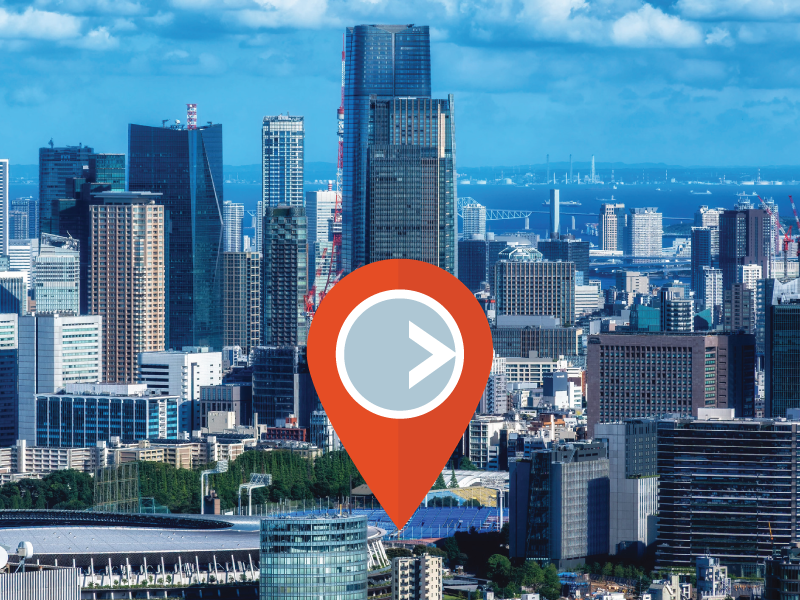
Tokyo serves as Japan’s economic center and one of the world’s leading business hubs, supporting significant activity across finance, technology, manufacturing, research, healthcare, professional services, and global commerce. The region combines advanced infrastructure with a highly organized operating environment, creating a destination that attracts both multinational organizations and highly skilled talent.
From a mobility standpoint, Tokyo’s defining characteristic is not simply its size. It is how tightly everything is connected. Housing, transportation, education, and workplace location rarely operate as separate decisions. Changes in one area often affect multiple aspects of daily life, making early planning essential to a successful transition.
For relocating employees, understanding how those connections shape everyday routines is often more valuable than understanding the city itself.
In Tokyo, relocation planning works best when housing, transportation, family priorities, and lifestyle expectations are considered together from the outset.
The Tokyo breakdown:
- Central business districts: Exceptional transit access, proximity to corporate offices, and convenient access to urban amenities, often with more compact living environments
- International residential areas: Popular with globally mobile employees seeking housing options, services, and communities familiar to international families
- Family-oriented commuter districts: Residential environments with strong community infrastructure, educational options, and well-established daily routines
- Rail-connected suburban communities: Additional living space and a more residential atmosphere, supported by extensive public transportation access
Location decisions influence more than housing. They shape commuting patterns, family logistics, community integration, and long-term relocation satisfaction.
Tokyo Move Type, Housing Access and Market Entry
Housing selection is one of the most important early decisions for employees relocating to Tokyo because it influences nearly every aspect of daily life after arrival.
मुख्य विचारणीय बिंदु:
- Housing options vary significantly by neighborhood, building age, and proximity to transportation networks
- Local leasing practices and documentation requirements may differ from employee expectations
- Commute preferences frequently influence housing availability and neighborhood suitability
- Temporary housing may provide valuable flexibility while long-term decisions are evaluated
Hidden Challenge:
Employees often compare housing options primarily by size, cost, or appearance. In Tokyo, factors such as transit access, walkability, station proximity, and neighborhood connectivity can have a greater impact on long-term satisfaction than the residence itself.
डब्ल्यूएचआर निम्नलिखित क्षेत्रों में सहायता प्रदान करता है:
- Helping employees evaluate housing decisions within the context of their overall relocation strategy
- Establishing realistic expectations regarding local leasing practices and market conditions
- Connecting housing choices to commuting, schooling, and lifestyle priorities
- Aligning location decisions with both assignment objectives and long-term employee satisfaction
Tokyo Commuting, Transport, and Daily Life Planning
Tokyo’s transportation network is one of the city’s greatest strengths, but employees benefit most when they understand how transportation influences daily routines rather than simply how it facilitates movement.
मुख्य विचारणीय बिंदु:
- Extensive rail and subway networks connect residential, commercial, and business districts
- Multiple route options often exist between home and work locations
- Commute quality is often influenced by transfers, station access, and travel patterns
- Public transportation plays a central role in how many residents experience the city
Hidden Challenge:
Employees often focus on commute time alone. In practice, transfer frequency, walking distance, station congestion, and route complexity can have a significant impact on overall commuting satisfaction.
डब्ल्यूएचआर निम्नलिखित क्षेत्रों में सहायता प्रदान करता है:
- Translating transportation systems into practical daily routines
- Evaluating commute feasibility alongside housing decisions
- Helping employees understand how transit access affects quality of life
- Supporting location strategies that balance convenience, flexibility, and sustainability
Tokyo Healthcare Registration and First-Month Administration
Tokyo offers high-quality healthcare and highly organized public services, but employees must complete several important administrative processes as they establish themselves locally.
मुख्य विचारणीय बिंदु:
- Healthcare access may involve a combination of employer-sponsored and local systems
- Administrative requirements can affect the timing of service activation and registration
- Documentation and local processes require attention to detail
- Early preparation reduces delays and uncertainty
Hidden Challenge:
Employees are often surprised by how many early-stage processes depend on accurate documentation, sequencing, and administrative preparation during the first weeks after arrival.
डब्ल्यूएचआर निम्नलिखित क्षेत्रों में सहायता प्रदान करता है:
- Preparing employees for key settlement requirements before arrival
- Providing guidance around documentation and local procedures
- Helping employees understand critical timelines and dependencies
- Reducing avoidable delays during the transition process
Tokyo Family and Schooling Considerations
For relocating families, educational planning often becomes one of the most significant drivers of housing and location decisions.
मुख्य विचारणीय बिंदु:
- Families may evaluate international, local, and alternative educational pathways
- School location can directly influence neighborhood selection
- Admission processes and enrollment timelines require advance planning
- Educational priorities often shape broader family relocation decisions
Hidden Challenge:
Many families initially view schooling as a separate decision. In Tokyo, educational choices frequently influence housing availability, commute feasibility, daily schedules, and long-term location strategy.
डब्ल्यूएचआर निम्नलिखित क्षेत्रों में सहायता प्रदान करता है:
- Incorporating educational planning into relocation discussions from the outset
- Helping families understand available options and planning considerations
- Aligning school, housing, and commute decisions
- Supporting long-term family stability throughout the transition
Tokyo Workplace Culture and Long-Term Integration
Relocating to Tokyo often requires employees to adapt to workplace norms and communication styles that may differ from those in other global business centers. Understanding those expectations can contribute significantly to long-term assignment success.
मुख्य विचारणीय बिंदु:
- Business interactions often emphasize preparation, professionalism, and attention to detail
- Decision-making may involve broader stakeholder alignment than employees expect
- Relationship building can develop differently than in some Western business environments
- Respect for process and consistency often influences both workplace and everyday interactions
Hidden Challenge:
Employees sometimes assume that working in a highly international city minimizes the need for cultural preparation. In practice, understanding local expectations often plays a significant role in confidence, credibility, and workplace effectiveness.
डब्ल्यूएचआर निम्नलिखित क्षेत्रों में सहायता प्रदान करता है:
- Providing destination and cultural guidance before and after arrival
- Helping employees understand practical workplace expectations
- Building confidence through preparation and local expertise
- Supporting successful integration into both professional and community environments
नियोक्ताओं के लिए यह क्यों महत्वपूर्ण है
Relocations into Tokyo are most successful when employees understand how the city’s interconnected systems shape everyday life. Housing, transportation, education, workplace expectations, and family priorities are closely connected, and decisions made in one area often affect outcomes in another.
Organizations that help employees understand those relationships early can reduce uncertainty, accelerate settling-in time, and improve overall assignment success.
डब्ल्यूएचआर ग्लोबल के साथ साझेदारी करके आप अपने मोबिलिटी प्रोग्राम को कैसे बेहतर बना सकते हैं?

WHR helps employers translate the complexity of Tokyo into a practical relocation strategy, allowing employees and families to focus less on navigating the system and more on succeeding within it.
“One of the biggest misconceptions about Tokyo is that employees can approach relocation decisions one at a time. In reality, almost everything is connected. Housing affects transportation, transportation affects daily routines, and family priorities often influence both. The employees who settle most successfully are usually the ones who understand those relationships early.
Tokyo is remarkably efficient, but it rewards preparation. Employees who take the time to understand how neighborhoods, schools, workplaces, and transit systems fit together are often surprised by how manageable the city becomes.
The most successful organizations help employees look beyond individual decisions and focus on the complete experience. When that happens, Tokyo becomes less about navigating a large city and more about taking advantage of the opportunities that make it one of the world’s most dynamic destinations.“
– रीटा वाहल, सीआरपी, जीएमएस, डब्ल्यूएचआर ग्लोबल सेल्स मैनेजर

1994 में स्थापित, WHR Global (WHR) एक निजी, पारिवारिक स्वामित्व वाली अंतर्राष्ट्रीय पुनर्वास प्रबंधन कंपनी है। हम फॉर्च्यून 100 निगमों से लेकर अमेरिकी सरकार तक कई तरह के संगठनों में मानव संसाधन, यात्रा प्रभागों और वैश्विक गतिशीलता विभागों के साथ साझेदारी करते हैं। हमारी स्थापना के बाद से, WHR स्वामित्व में कोई बदलाव नहीं होने के साथ एक पूरी तरह से और स्वतंत्र रूप से स्वामित्व वाला व्यवसाय बना हुआ है। हम अपने ग्राहकों और उनके कर्मचारियों को सफ़ेद दस्ताने, समर्पित सेवा प्रदान करके जीवन को आगे बढ़ाने के लिए समर्पित हैं।
अमेरिकी मुख्यालय • प्यूवाकी, WI
स्विटजरलैंड और सिंगापुर में अंतर्राष्ट्रीय कार्यालय
नेविगेट
सदस्यताएँ और मान्यताएँ